Are beauty advent calendars worth it? Our honest 2026 verdict
By Beauty Unwrapped · Published 9 November 2026 · Last updated 19 November 2026
Quick answer: a beauty advent calendar is worth it if you would use most of what is inside, not because of the value printed on the box. The average calendar in our tracker claims 3.7 times its price in products (the median is 3.6 times), but that is the retailer’s own sum of full retail prices.
How we put this together: we used the calendars in our tracker: prices, retailer-claimed values, product counts and full-size counts from the retailers’ own pages. Averages and medians are our own calculation. Price per product, price per full-size product and the overlap between calendars are our own calculations. Values marked as the retailer’s are the retailer’s claims. Prices and stock last checked 17 November 2026. Compiled by the Beauty Unwrapped team.
On paper, almost every beauty advent calendar looks like a bargain: the average one in our tracker claims 3.7 times its price in products. But that “worth” figure is the retailer’s own sum, and it only becomes real value if you use what is inside. This guide shows what a typical calendar contains, how to work out whether one is worth it for you, and what stretches the number on the box.
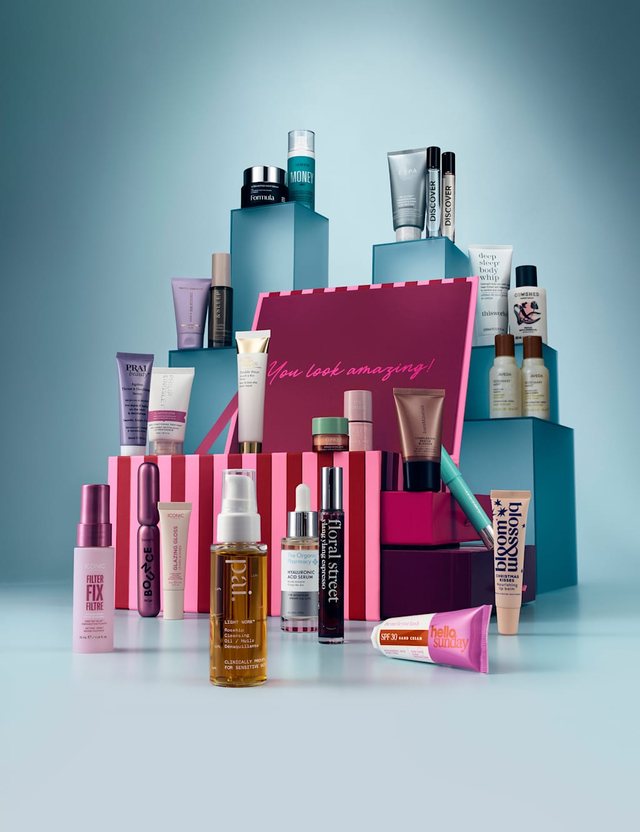 Marks & Spencer£75 · 26 products
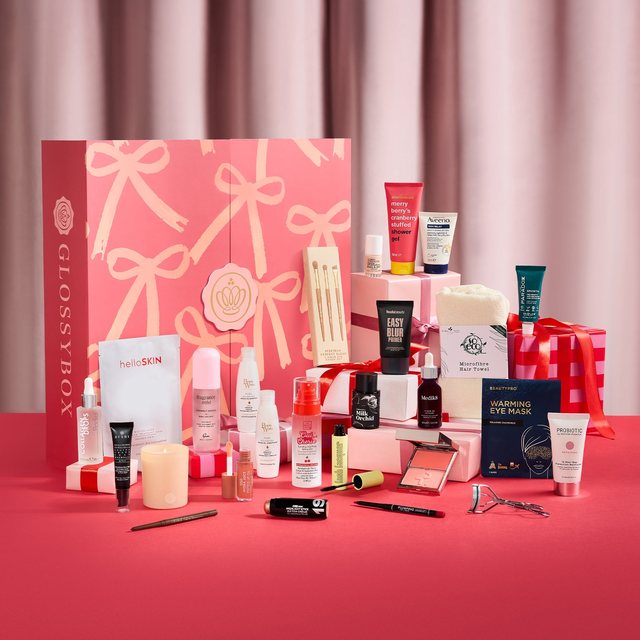 GLOSSYBOX£85 · 26 products
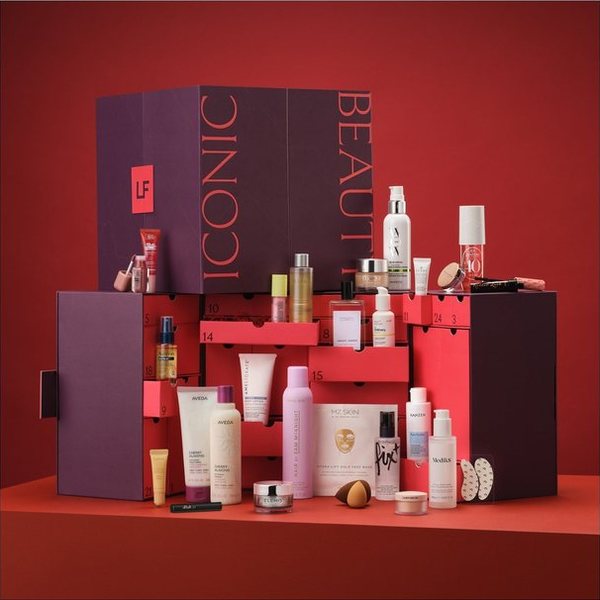 LOOKFANTASTIC£120 · 27 products
 Liberty£285 · 29 products
What the average calendar claims
We track 58 beauty advent calendars for 2026, and 55 of them publish a contents value. Here is what the typical calendar looks like, with “typical” meaning the median: the middle calendar when they are lined up from lowest to highest.
- Claimed value: the average calendar claims 3.7 times its price in products and the median is 3.6 times. The range runs from 1.4 times to 9.4 times (55 calendars).
- Price per product: the median calendar works out at about £6.52 per product, calculated as the calendar’s price divided by its number of products (58 calendars).
- Full-size share: the median calendar has 48% of its products in full size, calculated from each retailer’s own full-size count. The rest are travel sizes, minis, sachets and accessories. The range runs from 4% to 88% (45 calendars that give a count).
All figures were calculated on 13 November 2026. See “How we calculated these figures” below.
Why the “worth” on the box isn’t the whole story
The claimed value is the retailer’s own total of every product at full retail price. These are retailer-stated figures, which we have not independently verified. They can be generous, and in 2026 there are clear examples of how they get stretched:
- Vouchers counted as value. Harrods’ £270 calendar included a £75 CurrentBody voucher you could only use in Harrods Knightsbridge or an H Beauty store.
- “Full size” counts are the retailers’ own. Space NK says 26 (see the note above on how it counts) and Liberty says 21.
- Random shades. Liberty’s Trinny London and Jones Road makeup comes in a shade chosen for you. Wrong shade, no value.
- Perfume samples. A 7.5ml vial of niche perfume carries a big price tag for its size. Great if you’ll wear it, clutter if you won’t.
None of this makes calendars a con. It just means the number on the box is the retailer’s ceiling, not a guaranteed saving.
How to work out if a calendar is worth it for you
The claimed value counts every product, including ones you would never buy. What matters is the value of the products you would otherwise pay for. A fair way to check:
- Read the contents list and pick out the products you would genuinely buy anyway.
- Add up what those products cost at full retail price. For minis and travel sizes, price only the amount you would use.
- Compare that total with the calendar’s price. If the total is higher, the calendar is worth it for you on those products alone, and anything else inside is a bonus.
An example with made-up numbers: a calendar costs £120. You find five products you would buy anyway, at £30, £22, £18, £25 and £20. They come to £115 at full price, just under the £120 you would pay, so those five alone do not quite cover it, and you would be relying on the rest being worth something to you.
This is why a share of products is not a share of value. Using a third of the products could recover far less than a third of the claimed value if the products you use are the cheap ones, or far more if they are the expensive ones. The table shows how much of the claimed value you would need to recover to break even, in pounds and not in products.
| Calendar | Price | Claimed value | Full size | Price as % of retailer-claimed value |
|---|---|---|---|---|
| GLOSSYBOX | £85 | £645 | 21 of 26 | 13% |
| Marks & Spencer | £75 | £450 | 10 of 26 | 17% |
| LOOKFANTASTIC | £120 | £665 | 19 of 27 | 18% |
| Boots 24 Days of Luxe | £150 | £709 | 19 of 27 | 21% |
| Liberty | £285 | £1,300 | 21 of 29 | 22% |
| Space NK | £275 | £1,200 | 26 of 35 | 23% |
The percentage is the share of the retailer-claimed value that the purchase price represents. It is not a guaranteed break-even threshold: it assumes the claimed value is accurate and that you would value every product at full retail price.
When a beauty advent calendar isn’t worth it
A calendar is unlikely to be worth it if you:
- have a fixed routine and rarely try new products
- only use one category, such as just skincare
- have sensitive skin and can’t use many new formulas
- are mainly tempted by the big “worth” number on the box
If that’s you, buy the two or three products you’d actually use. You’ll spend less and waste nothing.
How we calculated these figures
- Which calendars: the beauty advent calendars for 2026 in our tracker, meaning those UK retailers sell and that we can find. There were 58 on 13 November 2026, and 55 of them publish a contents value. Read more on our About page.
- Price, contents and product counts: taken from each retailer’s own product page.
- Claimed value: the retailer’s own stated worth, which adds up every product at full retail price. We report it as a claim and have not verified it.
- Average and typical: the average is the mean. Typical means the median. Each figure uses only the calendars that publish the number in question, and the number of calendars is given alongside it.
- How often: we check stock status daily, and we recalculate these figures when we update this guide. They were last calculated on 13 November 2026.
- Research, not a lab test: prices, contents and values come from retailer pages. Our observations are based on published product details, retailer information and comparison of calendar contents. We have not independently tested every product.
Our verdict
Whether a calendar is worth it depends on the products you would otherwise buy, not on the number on the box. Judge it on the contents list and the full-size count, and add up what you would really use. Compare every calendar’s price, claimed value and full sizes in our tracker, or put two side by side. Choosing between two luxury calendars? Read our Space NK vs Liberty comparison.
FAQs
Is the M&S beauty advent calendar worth it?
It can be, if you want to try lots of products rather than stock up. At £75 it is one of the lower-priced calendars from a major UK retailer in our tracker, and it claims £450 of products, 6.0 times its price. The catch is that only 10 of its 26 products are full size (38%), so much of it is minis that won’t last past January. GLOSSYBOX has 21 full-size products out of 26 for £10 more.
Is the Liberty advent calendar worth it?
It is worth it if the contents suit you. Liberty (£285, claimed over £1,300) has 29 products, 21 full size, and eight niche fragrances from houses like Ex Nihilo, Fugazzi and Escentric Molecules. Liberty says 26 of the 29 products are new to its calendars, so it leans towards discovering new brands. That is Liberty’s own claim and we have not compared it with other calendars. If you don’t wear perfume, much of its claimed value won’t be useful to you, and Space NK may suit you better. Read our Space NK vs Liberty comparison.
Is the Space NK advent calendar worth it?
It is a strong choice if you want products you will use up. For £275 (claimed over £1,200) you get 35 products, 26 full size, including La Mer, Olaplex, Augustinus Bader and Charlotte Tilbury. As of 13 November 2026, 74% of its products are full size, the highest share among the luxury calendars (£200 and over) in our tracker that are not sold out; Liberty is next at 72%. It is mostly everyday skincare, haircare and body care. The catch: regular calendar buyers will recognise many of the brands.
Is the Boots advent calendar worth it?
The Luxe one is worth considering. The Boots 24 Days of Luxe Beauty (£150) claims £709 of products, 4.7 times its price and above the 3.6 times median in our tracker, with Estée Lauder, NARS, Clinique and Benefit among 27 products, 19 of them full size. Boots cut its £150 calendar by 15% for Black Friday last year, so it may be worth waiting. For skincare only, the 24 Days of Skin (£70) has 21 full sizes out of 24, so it is worth checking Boots for current availability.
Is the LOOKFANTASTIC advent calendar worth it?
It is one of the stronger mid-price options on the numbers. Among calendars priced £100 to £199 in our tracker, only Avant (9.4), Elle (5.7) and OK! Beauty Box (5.6) claim a higher ratio than its £665 for £120 (5.5 times its price), and 19 of its 27 products are full size (70%). Check its page for current availability. This year each product was picked by a beauty insider or member of the LOOKFANTASTIC team. Its main rival is Boots Luxe: LOOKFANTASTIC is £30 cheaper, while Boots has the bigger names.
Is the GLOSSYBOX advent calendar worth it?
It is the best mix of value and full sizes under £100 on two measures from our tracker. Among calendars under £100, it has the highest claimed-value ratio (£645 for £85, 7.6 times its price) and the second-highest full-size share: 21 of 26 products (81%), behind only Boots 24 Days of Skin at 88%. Claimed value is the retailer’s own figure. Most of what you open is something you can use up.
Are beauty advent calendars worth the money?
It depends on what you would otherwise buy. Add up the full retail price of the products you would actually use and compare the total with the calendar’s price. The claimed value on the box is the retailer’s own figure, not a guaranteed saving.
What changed
- 19 November 2026: Added a quick answer, a method note and this log.